Continuous scouting
The agent uses a built-in web search skill and structured API integrations (UN OCHA, ReliefWeb, regional news) to surface new projects every minute, day and night.
On-chain treasury
All donations enter a transparent multi-sig treasury. Disbursements happen via smart contract, never via discretionary human transfer.
Milestone-locked grants
Funds release in tranches tied to specific, verifiable milestones — never as a single lump sum.
Human-in-the-loop verification
A distributed network of individual and corporate verifiers confirms milestones with geolocated evidence before the next tranche unlocks.
Public broadcast
Every shortlist, every disbursement and every milestone is auto-posted to the foundation's Telegram channel and X account by the agent itself.
Costs — published on-chain
No hidden fees. Every operating cost is recorded on-chain. Inbound crypto flows to projects we've confirmed on the ground or sits in the treasury earning yield for future grants.
The premise
Charity has an incentive problem.
The institutions that dominate it are funded to exist, not to succeed — sustained by their own overhead, judged by how much they raise rather than how much they solve. Threeya starts elsewhere: deciding where charitable money does the most good is, at its core, an optimization problem. An artificial intelligence, held to a public ledger, can solve it more objectively than the committees that have owned that decision for a century.
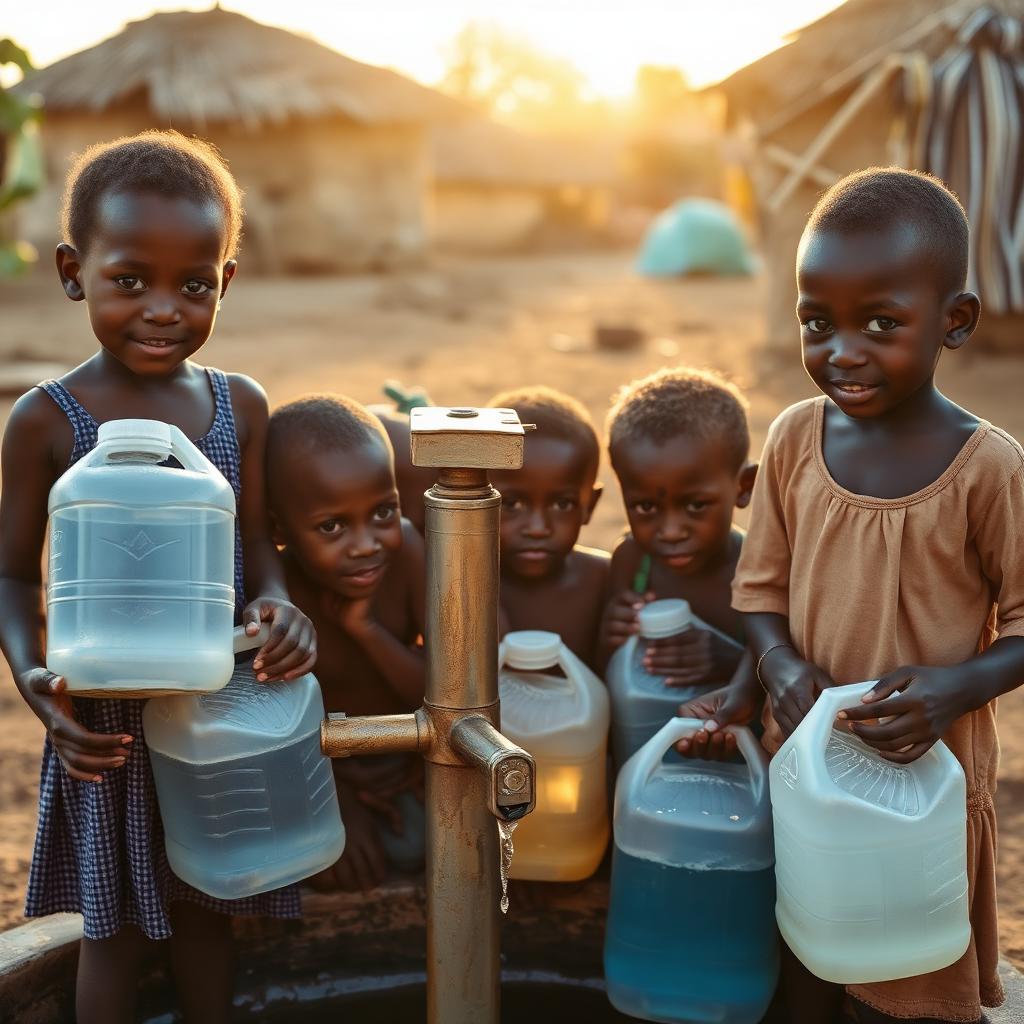
A structure in decay
The world's largest aid apparatus has worked on hunger for eight decades.
Progress stalled years ago and in places has reversed — while ecological and planetary pressures mount faster than the system can answer for. That is what a decaying structure looks like: one that spends most of its energy sustaining itself and reports its own survival as progress. We are not here to reform it. We are building what makes it unnecessary.
What we're protecting
Our aim is larger than any single cause.
Above the physical world sits the noosphere — the living layer of thought, knowledge, and conscience that human intelligence spreads across the planet. It is the most fragile thing we have, and the only thing capable of repairing the rest. Threeya exists to defend it: to put the most powerful intelligence of our time in the service of life instead of surveillance, of building instead of control. The same technology now trained to watch and to target — pointed instead at what keeps the planet, and the minds on it, alive.
Your Goodwill Footprint, on-chain
Every donation earns a Goodwill Footprint.
A public, step-by-step record of where your money went and what it did: the receipt, the AI's reasoning, the human check, the transfer, geotagged proof from the ground, and a 90-day follow-up. It lives on the blockchain, not in a brochure. Each one carries a shareable Footprint ID — so the proof is yours to hold up, not a promise you're asked to believe, but a record anyone can verify.
Threeya vs. traditional charity
A different operating model, head to head.
| Threeya | Traditional charity | |
|---|---|---|
| What you fund | The cause, down to the dollar | The cause, plus the institution around it |
| Who decides | AI selects, reasoning public; a human check during the pilot | Closed committees |
| Overhead | Published on-chain, per donation | Disclosed in aggregate, if at all |
| Proof of impact | Geotagged + multi-signature + 90-day follow-up | Annual report, selected stories |
| Can you verify it? | Yes — the whole chain is public | No |
The experiment
Threeya is a socio-economic experiment with one hypothesis.
That intelligence, made accountable to a public ledger, can do more good than the institutions that forgot how. We're testing it in the open, and putting every result on the record.
From pilot to permanence
The wrapper matures; the protocol stays identical.
Genesis runs under the Estonian operator so the model can be tested in public at small scale. As the pilot proves out, the treasury and grantmaking migrate into a dedicated charitable structure built for donors' jurisdictions — a European foundation first, a US public charity as donor volume justifies it. The protocol stays identical; only the wrapper matures.
Charter
"Move resources from where they sit idle to where they save lives — as fast as a network can verify them."
— Threeya Foundation, Article I